

1. Overview of the Customization Process
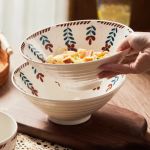
As a professional ceramic manufacturer, customizing ceramic ramen bowls requires aligning market objectives with technical production expertise. Each stage of custom ceramic ramen bowl production is meticulously managed—from product positioning and design planning to final delivery—to ensure quality and brand value. Custom ceramic ramen bowls are an essential part of modern dining, and selecting the right design can elevate the dining experience. When choosing, ensure the design of custom ceramic ramen bowls aligns with your brand style.
1.1 Clarifying Purpose and Design Requirements
Purpose Definition: The design of custom ceramic ramen bowls must consider various factors, including brand image and market demand. Choosing custom ceramic ramen bowls can enhance the unique dining experience.
- Brand Promotion: Bowls featuring corporate logos are suitable for launch events or franchise branding, emphasizing visual identity and consistency.
- Marketing Gifts: For festivals or exhibitions, balance cost, lead time, and quality.
- Premium Gifting: Bone china bowls with elegant packaging target high-end clientele to enhance gift value.
Key Design Considerations:
- Material Selection:
- Kaolin Porcelain: Fired at ~1300°C, fine texture, highly durable—ideal for mid-to-high-end markets.
- Bone China: High translucency and whiteness, best for premium gifts, but higher in cost.
- Strengthened Porcelain: Impact-resistant, suitable for high-turnover use in restaurants.
- Recommended Dimensions: Diameter 20–25 cm, depth 8–10 cm, capacity 800–1200 ml—ideal for ramen use.
- Brand Integration:
- Design files in AI/PSD format, resolution ≥300DPI.
- Use Pantone codes to ensure color consistency in mass production.
- Incorporate cultural motifs such as Japanese wave patterns, cherry blossoms, or hand-drawn illustrations.
- Functional Features:
- Anti-slip Base: Silicone rings or sintered base glaze.
- Chopstick/Spoon Grooves: Pre-designed into molds.
- Heat and Cleaning Resistance: Lead-free glaze, tested for microwave and dishwasher use.
- Style-Market Fit:
- Japanese Mino or Arita styles, or Nordic minimalist designs.
- Provide 3D renderings or samples for customer confirmation.
1.2 Key Production Techniques
Forming Methods:
- Slip Casting: Ideal for complex shapes and uniform thickness.
- Jiggering: Suitable for high-efficiency mass production with fixed shapes.
- Hand Throwing: Used for high-end custom orders, emphasizing craftsmanship.
Glazing and Firing:
- Glaze Selection: Lead- and cadmium-free, food-grade glaze meeting CNS 12431, FDA, or LFGB standards.
- Glazing Methods: For custom ceramic ramen bowls, selecting lead- and cadmium-free safe glazes is critical.
- Dip Glazing: Even coverage, suited for single-color pieces.
- Spray Glazing: Enables gradient or localized effects.
- Decal Application: High-temperature transfer printing for detailed patterns.
Firing Control:
- Bisque Firing: 800–900°C to stabilize the body structure.
- Glaze Firing: 1200–1400°C with precise atmosphere control (oxidizing/reducing) to affect glaze color and gloss.
- Atmospheric Adjustment: Accurate control of kiln oxygen levels prevents glaze color deviation.
Surface Finishing: Many users choose custom ceramic ramen bowls to enhance their brand image and customer experience. Thus, custom ceramic ramen bowls not only elevate the dining experience but also enhance brand value.
- Glossy Glaze: Smooth and shiny, easy to clean.
- Matte Glaze: Understated texture, enhances tactile warmth.
- Textured Finishes: Embossed or engraved patterns created during forming.
2. Choosing the Right Manufacturing Partner
2.1 Factory Evaluation Criteria
Expertise and Experience:
- Specialized in food-grade ceramics with export track record (especially for Japan, US, or Europe).
- Proficient in deep bowl structures and high-temperature firing requirements.
Equipment and Technology:
- Kilns: Tunnel or shuttle kilns ensure consistent firing.
- Mold Technology: CNC machining or 3D printing for precise and upgradable molds.
- Automation: Automated spraying and decal machines improve consistency and output.
Compliance and Certification: Ensure your custom ceramic ramen bowls meet international standards for global market sales.
- International quality and food safety certifications (e.g., ISO 9001, ISO 22000, FDA, LFGB).
- Compliant with CNS standards for the Taiwan market; test reports available upon request.
Minimum Order Quantity (MOQ):
- Standard: 1,500 pieces. Some factories accept trial orders of 100–300 pieces at higher unit cost.
2.2 Sourcing and Development Channels
Taiwan: When selecting suppliers, ensure they can provide high-quality custom ceramic ramen bowls. Ensure suppliers can deliver high-quality custom ceramic ramen bowls to meet market expectations.
- Yingge ceramic cluster supports small-batch and custom orders.
- Use solution integrators like Kezhida Co., Ltd. to coordinate factories and design teams.
Mainland China:
- Jingdezhen excels in high-end craftsmanship and artistic customization.
- Use platforms like 1688 or Alibaba to source export-ready suppliers, e.g., Sharmeehouse.
Trade Shows and Platforms:
- Canton Fair, Hong Kong Gifts Fair, Global Sources—ideal for OEM networking.
Sample Development Process:
-
- Offer multiple design styles (glaze, patterns); sample cost USD 100–300 per piece.
Market research shows that custom ceramic ramen bowls are highly popular among consumers, especially in Asia. As consumer demand for custom ceramic ramen bowls continues to rise, the market potential is significant.
- Lead time: approx. 7–14 days.
3. Critical Details and Risk Management
3.1 Technical & Material Safety
- Raw materials must pass heavy metal tests (Lead <0.1mg/L, Cadmium <0.01mg/L).
- Mold precision within ±0.1mm to avoid batch inconsistencies.
- Strict temperature ramp control (5–10°C/min) to prevent cracks or glaze defects.
3.2 Quality Control & Inspection
Internal QC:
- Appearance Check: No cracks, pinholes, glaze drips; pattern alignment error <0.5 mm.
- Function Tests:
- Thermal shock: 100°C → 20°C, no cracking.
- Load test: Bowl base withstands 5 kg.
- Stacking: Stable stacking of 10+ units.
Recommended Third-Party Tests: The packaging of custom ceramic ramen bowls should also reflect the brand’s image, and using eco-friendly materials can attract more consumers.
- SGS, Intertek, etc.:
- Food safety (CNS, FDA, LFGB compliance).
- Heat resistance, dishwasher safety.
- Optional: Antibacterial testing if requested.
3.3 Labeling and Packaging Compliance
| Region | Labeling Requirements |
| Taiwan | Chinese label, food-grade statement, origin, manufacturer info |
| China | Follow GB 7718; label material in Chinese, importer info if applicable |
| Japan | Comply with JIS and Food Sanitation Law, mark “Microwave Safe" etc. |
| USA | Comply with FDA & California Proposition 65, English labeling |
| Europe | Follow EC No. 1935/2004 & CE regulations, multi-language labels |
As consumer demand for personalized products increases, the importance of custom ceramic ramen bowls becomes more evident. The quality and design of custom ceramic ramen bowls directly influence consumer choices. Packaging Recommendations:
- Branded paper or wooden boxes with EPE foam lining.
- Include QR codes and anti-counterfeit labels to boost brand trust.
4. Cost Efficiency and Sustainability
Reference Cost Breakdown:
- Design & Sample Development: USD 300–800 (includes rendering, modeling, prototyping).
- Mold Fabrication: USD 500–2000 (depending on complexity).
- Unit Production Cost:
- Kaolin porcelain: USD 2–5.
- Bone china: USD 5–10.
- Packing & Logistics: USD 0.5–1 per unit.
Production Timeline:
| Stage | Timeframe |
| Design & Sampling | 2–4 weeks |
| Mass Production | 4–8 weeks |
| Shipping & Delivery | 2–4 weeks |
Sustainability Practices:
- Prioritize recyclable ceramic materials.
- Utilize energy-efficient kiln technologies.
- Use biodegradable packaging materials to attract ESG-conscious markets.
5. Cultural Adaptation and Brand Risk Control
Tailor graphics and forms to suit target market preferences.Custom ceramic ramen bowl designs that adapt to local cultures can better attract target markets. To ensure success, designers must focus on every detail of custom ceramic ramen bowls. Custom ceramic ramen bowls incorporating traditional elements can resonate more with the market. Custom ceramic ramen bowl designs tailored to the market can better attract target consumers.
- Avoid religious or political imagery.
- Enhance regional design appeal (e.g., Japanese motifs or minimalist lines) to boost market acceptance.
 custom beer mugs